GC-APCI II SOURCE ULTRA-HIGH RESOLUTION TOF-MS ON GC
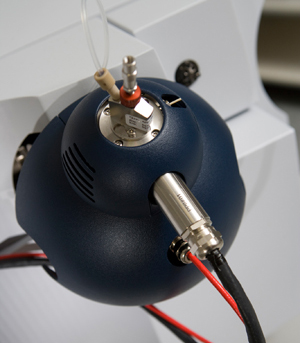
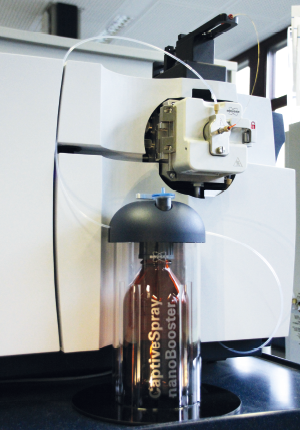
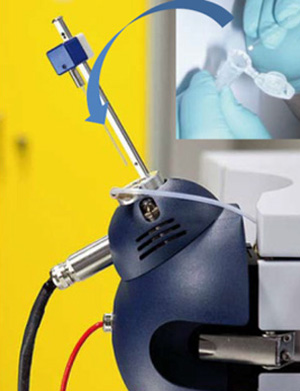
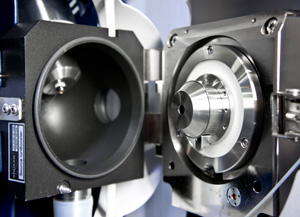
Todays analytical chemistry often presents complex mixtures of compounds which are not available in libraries and data bases. Identification of such components can be easily performed with Bruker's ultra-high resolution TOF systems designed for LC or GC use. With its second generation GC-APCI source, Bruker offers the greatest flexibility and highest performance with a combined GC frontend and high-resolution MS system for confident ID of unknown compounds using complementary MS technology. The GC-APCI II interface can be coupled to any Bruker MS system with the common Apollo II source design. GC-APCI II is designed to connect to state-of-the-art GC systems including Bruker's 436-GC and 456-GC but can also be used with third party GC systems. The flexible, heated transfer line, automatic MS calibration and outstanding sensitivity make GC-APCI II the best solution for unknown ID in metabolomics and small molecule research. THECNICAL DETAILS: • Making a dedicated and expensive GC-TOF-MS used infrequently for just a few samples a thing of the past: The GC-APCI II source enables GC coupling to any Bruker TOF or QTOF, trap or FTMS system originally designed for LC coupling. • Switching of the sources without venting the vacuum: The system has the capability to be easily switched from GC to LC and vice versa without tools and within minutes. There is no need to vent the MS vacuum. • Greater Flexibility: The design of the flexible heated transfer line means that the GC and MS must no longer be precisely aligned. Interfacing the GC and MS is simpler, giving more options in positioning the MS and GC while preserving the obtained GC separation. • Automatic MS Calibration: The unique calibrant reservoir of the GC-APCI II interface enables software-controlled calibrant delivery. • Improved LLOQ: The optimized ionization chamber provides improved GC-MS performance including lower background and higher sensitivity. APPLICATIONS: • Unknown ID in Metabolomics: GC-MS is one of the few standard techniques in metabolomic analysis. In recent years the combination of gas chromatography and Atmospheric Pressure Chemical Ionization (APCI) with high resolution mass spectrometry techniques has proven to be an important additional tool for the analysis of highly complex mixtures of natural products from plants and body fluids. While standard GC-EI-MS is based on the availability of mass spectral libraries, GC-APCI allows the assignment and identification of unknown metabolites. GC-APCI II has arrived with improved performance, lower background and higher sensitivity; opening a new dimension in the analysis of metabolomic samples. • Forensic Analysis: The broad applicability of Atmospheric Pressure Chemical Ionization (APCI) mass spectrometry enhances the analysis of forensic samples. The combination of GC-APCI II with a high resolution TOF mass spectrometer enables confident verification in drug analysis and additionally supports the identification of street drug additives and pain killers as well as drug degradation products. • Polycyclic Aromatic Hydrocarbons (PAH): Polycyclic Aromatic Hydrocarbons (PAH) are ubiquitous in the environment and many of them are considered to be carcinogenic. The analysis of these compounds at low concentrations is therefore an important task in environmental and food analysis. Atmospheric Pressure Chemical Ionization (APCI) in combination with high resolution mass spectrometry techniques opens a new dimension in terms of sensitivity. APCI can be used in combination with GC and LC separation to cover the whole range of PAHs. • Pesticide Analysis: Pesticide analysis is an analytical challenge in environmental chemistry and in food control. Compared to traditional MRM monitoring the GC-APCI II source connected to a high resolution TOF provides new insights into pesticide analysis; combining broad band screening analysis with selective and sensitive detection of target analytes. GC-APCI II assists in finding new compounds and identifying unknowns in your samples.
You may also be interested in these products